
Dambulla Cave Temple
"The largest and best-preserved cave temple in Sri Lanka — five caves with 153 Buddha statues and 2,000 sq m of ceiling paintings spanning 2,200 years."
1st c BC
Founded
153
Buddha statues
2,000 sq m
Ceiling paintings
2,000 sq m
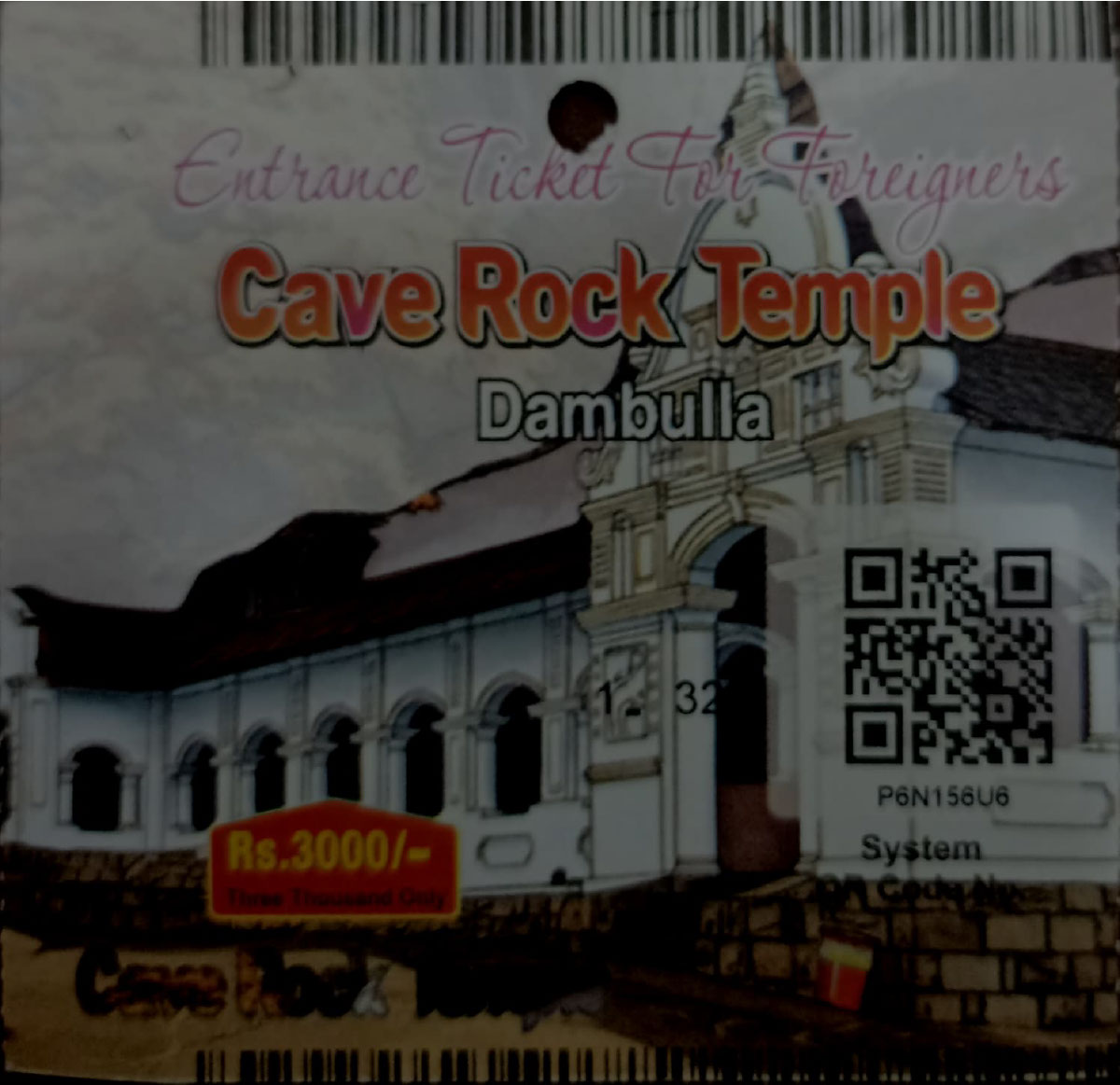
Entry fee
Ticket Prices
Child under 12 yrs
Best Time to Visit
Best — Early Morning
Low angle sunlight floods through cave openings, illuminating the paintings in warm golden light. The walk up is coolest at this hour. Minimal crowds.
.
Good — Late Afternoon
Second-best lighting window. Cooler temperatures and the caves take on a different atmospheric quality in the fading light.
Avoid Midday
The exposed rock path becomes very hot underfoot during dry season. Paintings are harder to photograph in harsh midday light.
Best time to visit:
Cave 1 (the reclining Buddha cave) has the best natural light in early morning. Cave 2 (the richly painted great cave) is best lit from mid-morning. Time your visit accordingly.
Gate Opens
7:00 AM
Shoes must be removed at the ticket counter. Dress modestly — shoulders and knees covered. Sarongs for hire at entrance. No flash photography inside the caves.
Key Highlights
Cave 1 — Devaraja Lena
A single colossal 15-metre reclining Buddha carved directly from the rock. The curved ceiling painting above the figure is one of the finest examples of Buddhist ceiling fresco in Asia.
Cave 2 — Maharaja Lena
The largest and most richly decorated cave. 56 statues. The ceiling is covered end-to-end in paintings depicting the life of the Buddha and Buddhist cosmology — the greatest cave painting in Sri Lanka.
Cave 3 — Maha Alut Viharaya
Built during the Kandyan period (18th century). 57 statues including a beautifully painted gold-and-red Buddha. Among the most vibrant paintings in the entire complex.
Cave 4 & 5
Cave 4 contains a rare statue of the Hindu deity Brahma. Cave 5 (most recently built) features a reclining Buddha and standing deities. Both are smaller but complete the full artistic narrative.
The Approach Walk
The 15–20 minute walk up the paved rock path passes through woodland and offers the first sweeping views over the plains. Monitor lizards often sun themselves on the rocks near the entrance.
Dambulla Museum
At the base of the hill — excellent contextual exhibits on the history of the paintings and conservation techniques. Housed in a striking golden building. Well worth the separate USD 2 entry.
1st c BC
King Valagamba Takes Refuge
Samuel Baker (later famous for his Nile explorations) visits the Horton Plains and names the waterfall after himself. He describes the plateau as one of the finest landscapes in the world.
1st c BC
Royal Temple Established
Horton Plains is gazetted as a national park, protecting the unique highland grassland ecosystem from agricultural encroachment that had already destroyed much of the original habitat.
12th c AD
Royal Patronage
Inscribed as part of the Central Highlands of Sri Lanka World Heritage Site, alongside Peak Wilderness Sanctuary and Knuckles Conservation Forest.
18th c AD
Kandyan Repainting
The park's endemic and endangered species — including the Sri Lankan leopard — continue to be monitored and protected. The Horton Plains ecosystem remains one of Asia's most important montane conservation areas.
1991
UNESCO World Heritage
The park's endemic and endangered species — including the Sri Lankan leopard — continue to be monitored and protected. The Horton Plains ecosystem remains one of Asia's most important montane conservation areas.
"To walk through the caves of Dambulla is to walk through 2,200 years of continuous human devotion — each generation adding its prayers to the rock "
— UNESCO World Heritage Nomination, 1991
Visitor Guide
Essential Tips
01 Remove Shoes Early
Remove at the ticket counter area and carry in a bag — the path continues up from there.
02 No Flash Photography
Strictly prohibited. The ancient mineral pigments are extremely light-sensitive.
03 Hire a Guide
USD 10 for a licensed cave guide. Will explain the iconography and stories behind each image.
04 Dress Modestly
Shoulders and knees covered throughout the entire site. Sarongs for hire at the entrance.
05 Visit Cave 2 Twice
Most visitors rush through. Cave 2 rewards slow exploration — every inch of the ceiling tells a story.
06 Allow 1.5–2 Hours
Plus 30 extra minutes if visiting the museum at the base.